

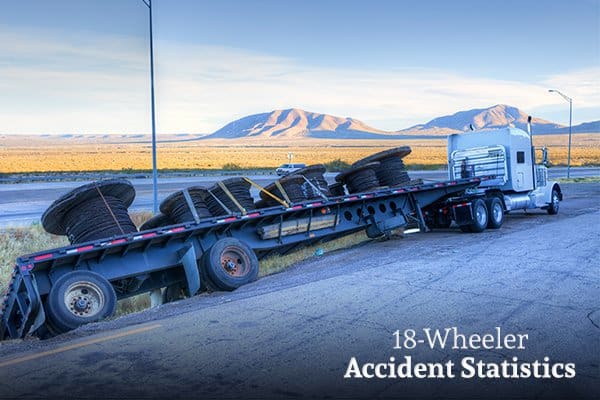
Interstate 35E through Dallas carries thousands of commercial trucks daily, mixing 80,000-pound tractor-trailers with passenger vehicles in congestion that turns routine commutes into high-stakes gambles.
When a truck crash happens—and the statistics show they happen with alarming frequency across the Dallas–Fort Worth metroplex—insurance companies treat the numbers like background noise. But these statistics tell a different story: truck accidents in North Texas aren’t rare flukes; they’re predictable consequences of systemic problems in an industry that prioritizes delivery schedules over safety.
At Branch & Dhillon, P.C., our truck accident attorneys represent injured victims throughout Dallas, Fort Worth, Arlington, and the greater DFW metroplex. Contact us for a free consultation. We work on a contingency fee basis—you pay nothing unless we win.
Key Takeaways for DFW Truck Accident Statistics
- Dallas County and Tarrant County consistently rank among Texas counties with the highest commercial motor vehicle crash totals, with TxDOT data showing thousands of truck-involved crashes annually in each county
- Major DFW highways, including I-35E, I-30, I-20, and I-635, see disproportionate truck accident rates due to high commercial traffic volumes, mixing passenger vehicles with semi-trucks in congested conditions that amplify collision severity
- Common causes of DFW truck crashes mirror national trends but reflect regional factors, including driver fatigue from long-haul routes through Texas, distracted driving, unsafe lane changes in heavy traffic, speeding, and inadequate vehicle maintenance
- Truck accident fatality and serious injury rates in North Texas remain concerning, with crashes involving commercial motor vehicles producing more severe outcomes than passenger vehicle collisions due to size and weight differentials
- Statistical patterns in truck crash data support liability arguments by demonstrating that certain violations, conditions, and carrier practices correlate with higher accident rates, making crash statistics valuable evidence in injury claims
How Many Truck Accidents Happen in Dallas–Fort Worth Each Year
The Texas Department of Transportation (TxDOT) tracks commercial motor vehicle (CMV) crashes through its Crash Records Information System (CRIS) and Traffic Safety Data Portal, providing detailed county-level data that highlights the severe truck accident problem across the Dallas–Fort Worth metroplex.
Dallas County
Dallas County leads with 3,857 truck crashes in 2024, including 29 fatalities, making it one of Texas’s deadliest counties for commercial vehicle collisions. The county’s dense interstates (I-35E, I-45) and role as a freight hub amplify risks.
Tarrant County
Tarrant County recorded 1,716 truck crashes in 2024, including 19 fatalities, driven by high-traffic routes like I-30, I-20, I-35W, and US-287 near Arlington and Fort Worth. These highways see frequent rear-ends, sideswipes, and angle collisions, with 1 in 10 crashes resulting in serious injury or death.
Collin and Denton Counties
Collin and Denton Counties together reported nearly 1,600 truck crashes in the same period, reflecting northward metroplex growth and increased freight along I-35 and SH-121.
Statewide
Statewide, Texas hit 39,393 CMV crashes in 2024 and a total of 608 fatalities.
Truck accidents produce more devastating outcomes than passenger vehicle collisions. An 80,000-pound loaded semi-truck striking a 3,500-pound passenger car creates force disparities that result in catastrophic injuries: traumatic brain injuries, spinal cord damage, multiple fractures, internal organ damage, and amputations.
TxDOT crash data breaks down injury severity categories, and commercial motor vehicle crashes show higher representation in fatal and serious injury categories compared to their overall crash frequency. When trucks are involved in crashes, the outcomes skew toward more severe harm because occupant protection systems in cars can’t compensate for the sheer mass differential.
Underride crashes represent a particularly deadly category. When passenger vehicles slide underneath truck trailers the car’s roof collapses into the passenger compartment, often resulting in severe head trauma or fatalities. Federal underride guard regulations exist, but gaps in side guard requirements and inadequate rear guard standards allow these preventable deaths to continue.
Which DFW Highways See the Most Truck Accidents
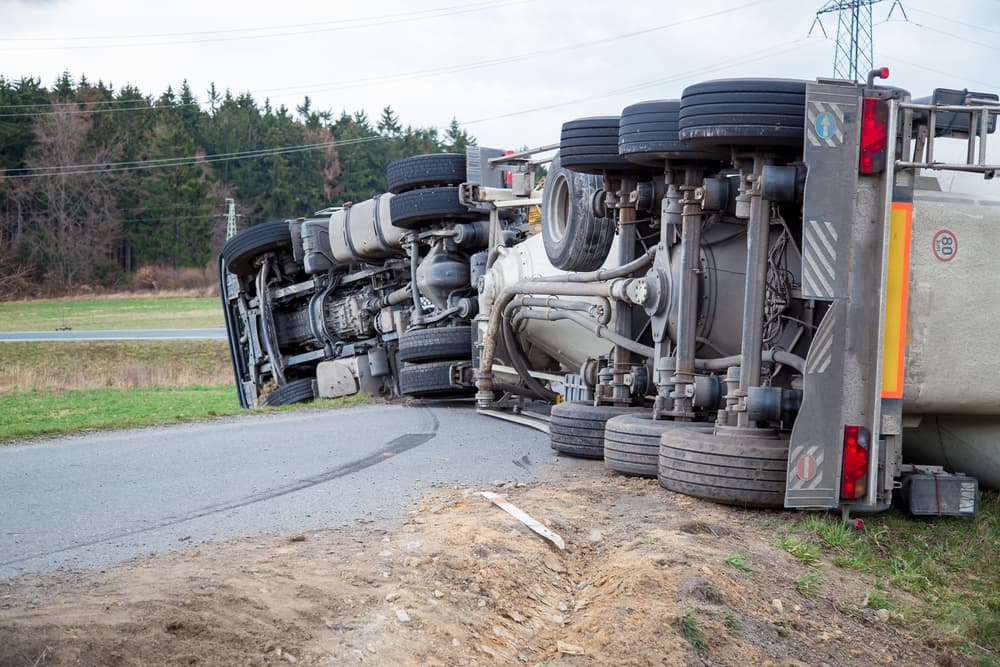
Commercial truck traffic concentrates on major interstate corridors through the Dallas–Fort Worth metroplex, and crash statistics reflect this concentration.
Interstate 35E
Interstate 35E through Dallas carries heavy north-south freight traffic connecting Mexico, Central Texas, and points north. The corridor’s chronic congestion, frequent construction, and mixing of through-freight trucks with local commuter traffic creates collision risks. Truck crashes on I-35E through Dallas County appear regularly in TxDOT data.
Interstate 30
Interstate 30 serves as a major east-west route connecting Fort Worth, Arlington, and Dallas, continuing eastward toward Texarkana and westward to Abilene. The I-30 corridor through Tarrant County and Dallas County sees substantial commercial vehicle traffic. Congested segments, particularly approaching downtown Dallas and through Arlington, experience frequent truck-involved crashes.
Interstate 20
Interstate 20 runs east-west south of downtown Dallas and Fort Worth, carrying significant commercial traffic including trucks serving Dallas/Fort Worth International Airport freight operations and regional distribution centers. The I-20 corridor through southern Dallas County and Tarrant County reports regular truck crash activity.
Interstate 635
Interstate 635 (LBJ Freeway) forms a loop around northern Dallas, handling local and through commercial traffic. The 635/35E interchange area, known for severe congestion, sees truck crashes involving both local delivery vehicles and long-haul carriers navigating the metroplex.
Interstate 45
Interstate 45 south of Dallas toward Houston carries enormous commercial truck volumes. While technically outside the core DFW area, the I-45 corridor represents one of Texas’s highest truck traffic routes, with crash statistics reflecting that volume.
US Highway 287
US Highway 287 serves Fort Worth and continues southeast toward Waxahachie and northeast toward Wichita Falls, carrying regional freight traffic that contributes to Tarrant County truck crash totals.
These corridors share common characteristics: high speeds, heavy congestion during peak periods, frequent merging and lane changes, and inadequate separation between passenger vehicles and commercial trucks. When driver error, fatigue, distraction, or vehicle defects enter the equation on these high-risk corridors, crashes follow predictably.
Common Causes of Truck Accidents in the DFW Area
TxDOT crash reports include contributing factors that help identify why truck accidents occur. While each crash involves specific circumstances, patterns emerge across DFW truck accident statistics:
- Driver fatigue: Federal hours-of-service regulations limit driving time; however, fatigued truck drivers exhibit impaired reaction times and poor decision-making, which contribute to crashes on DFW highways. In such situations, quick responses can prevent collisions.
- Distracted driving: Truck drivers using phones, adjusting GPS systems, eating, or dealing with dispatch communications create substantial crash risks, with even brief attention lapses at highway speeds covering dangerous distances.
- Unsafe lane changes and blind spot crashes: Commercial trucks have massive no-zones along both sides, directly behind, and extending forward from the cab, making lane changes without adequately checking mirrors particularly dangerous in DFW’s congested traffic.
- Speeding and following too closely: Loaded trucks require dramatically longer stopping distances than passenger vehicles, and following too closely eliminates the cushion needed to avoid collisions when traffic slows suddenly.
- Inadequate vehicle maintenance: Brake failures, tire blowouts, and mechanical defects result when carriers defer maintenance to cut costs, with brake defects proving particularly dangerous in DFW traffic, where constant stops and starts stress braking systems.
- Improper cargo loading: Overweight loads, improperly secured cargo, and unbalanced weight distribution make trucks harder to control, particularly during lane changes, curves, and emergency maneuvers.
- Impaired driving: Though less common, alcohol, illegal drugs, and prescription medications that impair driving ability create liability when crashes occur, despite stricter federal blood alcohol limits for commercial drivers.
These contributing factors appear repeatedly in crash data, demonstrating that many DFW truck accidents result from preventable violations rather than unavoidable circumstances.
How DFW Truck Accident Statistics Support Injury Claims
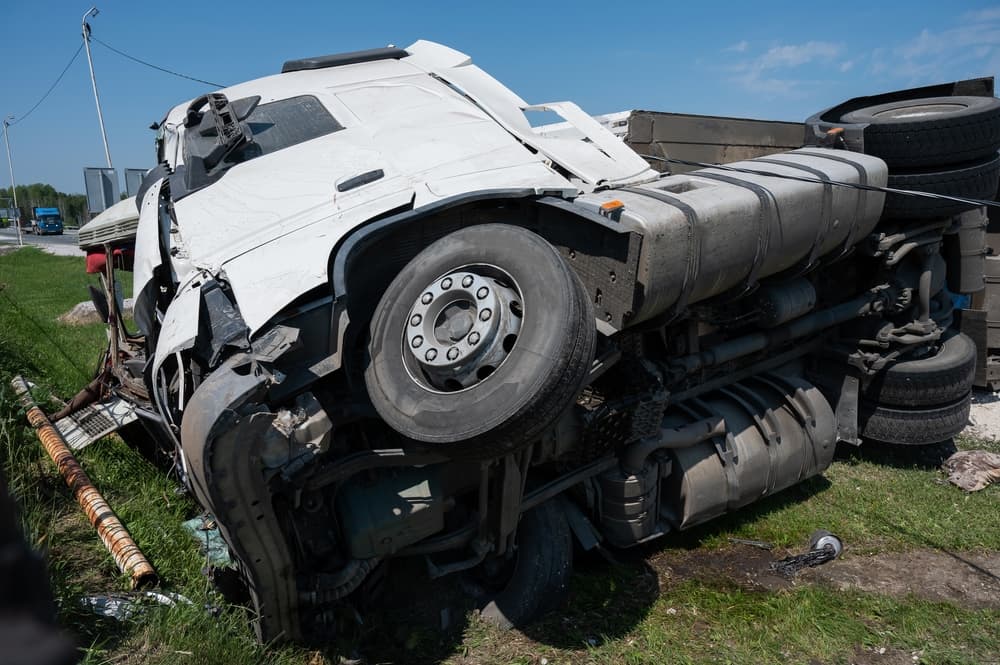
Crash statistics serve multiple purposes in truck accident injury claims beyond simple context. These numbers become evidence supporting liability arguments and countering insurance company defenses.
Foreseeability
Industry-wide data establishes foreseeability. When statistics show that certain violations or practices correlate with higher crash rates, such as hours-of-service violations, inadequate maintenance, and driver distraction, plaintiffs can argue that carriers engaging in these practices should have foreseen the risk. Foreseeability strengthens negligence claims by showing the defendant knew or should have known their conduct created danger.
Crash Concentration
Local crash concentration supports dangerous condition arguments. When data shows specific highway segments or intersections experience frequent truck crashes, this supports arguments that conditions at those locations create heightened risk. If a carrier’s route planning sends fatigued drivers through known high-crash corridors, or if inadequate signage contributes to crashes at particular locations, statistics help establish the link between conditions and crashes.
Comparative Data
Comparative data highlights the defendant’s conduct. If industry-wide statistics show certain safety practices reduce crash rates, but a defendant carrier failed to implement those practices, the statistical gap between industry norms and the defendant’s actual practices strengthens negligence arguments. Safety records comparing the defendant carrier’s crash rate to industry averages or to better-performing competitors demonstrate whether the defendant met reasonable care standards.
Severity Statistics
Severity statistics counter minimization attempts. Insurance adjusters routinely minimize truck crash severity by suggesting injuries could have resulted from any collision. Statistics showing that truck-involved crashes produce higher injury severity rates than passenger vehicle crashes counter these arguments by establishing that the commercial vehicle’s involvement directly contributed to outcome severity.
Our Dallas-Fort Worth commercial truck accident lawyers use crash statistics strategically in demand letters, settlement negotiations, and trial preparation. Numbers from authoritative sources like TxDOT, FMCSA, and NHTSA carry weight with insurance companies and juries. Statistics establish that your crash wasn’t a freak occurrence, but it was a predictable result of systemic problems in an industry that statistics prove operates with inadequate safety margins.
FAQ for DFW Truck Accident Statistics
Contact an experienced truck accident attorney immediately, before giving any recorded statements to insurance companies. Early attorney involvement ensures critical evidence gets preserved, your medical treatment is properly documented, and insurance adjusters can’t use your statements against you during settlement negotiations.
Potentially liable parties include the truck driver, the motor carrier or trucking company, leasing companies, cargo loaders and shippers, maintenance providers, parts manufacturers, and occasionally government entities responsible for roadway conditions. Comprehensive investigation may reveal multiple defendants whose negligence contributed to the crash.
Generally, Texas imposes a two-year statute of limitations for personal injury claims from the accident date, and wrongful death claims also face a two-year deadline from the date of death. Missing this deadline bars you from pursuing compensation in court regardless of how strong your evidence is, making prompt legal consultation critical.
Trucking companies aren’t vicariously liable for independent contractors’ negligence the way they are for employee drivers. However, carriers may still face direct negligence claims for negligent hiring, inadequate safety oversight, or violations of their own non-delegable duties. Additionally, lease arrangements and who controls dispatch, routes, and cargo may create liability depending on the specific relationship.
Yes, you may have claims against the truck driver and carrier even if your vehicle wasn’t directly struck by the commercial truck. Chain-reaction crashes caused by truck driver negligence create liability for all resulting injuries, and your attorney can establish causation through reconstruction evidence.
Holding Carriers Accountable with Evidence and Data
Insurance adjusters want you to believe truck accidents are unpredictable events, statistical outliers that couldn’t have been prevented. The data tells a different story. Thousands of truck crashes across the DFW metroplex occur each year, following predictable patterns: fatigued drivers on known high-traffic corridors, carriers cutting corners on maintenance, improperly loaded cargo, and distracted driving.
At Branch & Dhillon, P.C., we represent truck accident victims throughout Dallas, Fort Worth, Arlington, Tarrant County, and the greater DFW area who refuse to let carriers and insurers hide behind claims that crashes “just happen.”
The numbers show these crashes are preventable. We are ready to help prove yours shouldn’t have happened. Contact us today for a free consultation.